Cha / Romances


Cha

No HEBREW root so well can suit ;
More quickly taught, less dearly bought.
Yet studied twice a day.

This leaf, from distant regions sprung,
Puts life into the female tongue.
And aids the cause of love.
Phillip Freneau

Cruciform character;  flowering daughter of orient Wisdom’s delight
A hymn to thee, beloved bush and Tree of Life, I raise.
May thy plucked leaves forevermore renew their gracious budding
Even as thy captured progeny produce, in death, thy praise
Like captive Hebrew exiles driven far from Zion’s hill
Loving still their Judge and punisher, recalling golden days…
In this cup of glorious elixir, infusing life with cheer
Asia’s attributes unveil, while I upon her marvels gaze.
Serenity enfolding, I forget all those before
In a rapturous caress I swiftly yield to her embraces
Nevermore to recall the vulgar bean of Abyssinian lore
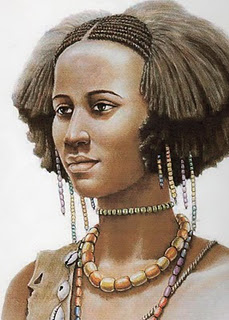
Ethiopian witch and desert hag, dark seed of nomadic races!
Now I hail the truth, whose leaf I love: L’chaim to the brew I adore
So sit with me and sip some cha. Let us kiss her myriad faces.
I scribe these lines in gratitude to that plant who soothes and inspires
Sweet Camellia, my love…  I read in the leaves your ascending triumphant traces.


PROMPT 17:

write a poem that contains the name of a specific variety of edible plant


 R O M A N C E S

Idealize them once they’re gone.
Pity is bestowed by victors;
Evening thus recalls the dawn—
Truth revised by truth’s depicters.

Swooning for the Noble Savage, 
That comes later. First comes war.
Conquerors arrive, then ravage:
Dominance worth fighting for. 

The conquerors, in retrospect,
Describe their subjugated foe
In shades politically correct
(After they’re defeated, though…)

Ambushes and scalps for dinner—
Pretty pictures of the past:
Airbrushed touch-ups from the winner;
Real depictions cannot last.

Idealizing distant lives
While snug inside your comfy home
Is fine; your living standard thrives.
But Gaul had other views of Rome . . .



Dysco Tech

Chopin: the Nocturnes . . .
Spacious empty house, at night.
Not Disco music.

PROMPT 16

write a poem that involves describing something in terms of what it is not, or not like.


There must emerge a kind of communication that’s not adequate to the design of the Machine: dyscommunication.  The name of the final game against the Machine is thus ABC-dysco.
from bolo’bolo by P.M.

Disco, seen by some as base,
Lightened up our heavy weather.
K.C’s sunshine proves my case:
Music can be made together.

A blast of brass now hails the muse,
Stepping, smiling, getting down—
Swaying in her platform shoes,
Transforming that sad Sixties frown.

Funked-up horns and pulsing rhythm
Have their place, in retrospect . . .
Though some may need an exorcism
From the Discotheque Effect.

Basslines, beats, and tambourines
Sound so much better played by men.
Our present-day synthetic scenes
Compare unfavorably with then.

And K.C’s grin remains infectious
As those back-up sisters sway;
When those horns kick in, it wrecks us,
Driving homeward all the way.

0f Canaanites and Kangz


Thou Ethiopian muse of mine: attend.
Now let my words wound souls and after, mend.
It’s time to slay some golden calves and knock
Some gods from off their pedestals. Let’s rock.
(I’d like my veal in gold-dust, with a side
Of injured Afrocentric racial pride.)

Moses cut an oppressor down, who bled…
Moses buried him in the sand, then fled.
(Every damned son of Adam bleeds out red.)
Midian offered shelter to the killer.
I hope you like my  prefatory filler . . .

Remember in the desert how the tribes
Put up with Moses’ scolding diatribes, 
Yet quickly fell for Aaron’s baby bull?
They paid for it, the half and then in full
By wandering around for forty years
And drinking bitter waters (Moses’ tears).
They even whined about his sultry bride;
Not Zipporah—his later, darker ride.
Let Ethiopia rise. She still is blameless
And Moses’ second wife here lauded nameless.

Discerning Israel means: there once were slaves.
Egyptians know the God of Hebrews saves.
Yehudah is no more the chosen clan
Than Joseph is old Pharaoh’s right-hand man.
And who is freed from bondage, and who’s not
Should make us pause—observe . . . then think a lot.

Some tribes are pale-faced, others darker still.
And none can claim to grasp God’s perfect will.
Let Nazi haters rise—and leave the room.
Black racists too, be gone; and I’ll resume
My question: who’s oppressed, and who’s a grifter . . .
And how a curse descends, and what’s the lifter.
Perhaps you are a Hebrew . . . yet, some curse
Is evident in how you make things worse
By raging over long-past wrongs and rights
(Passive-aggressive lovers’ quarrel with whites…)
While Indo-Europeans watch the fun,
All Asia sighs, and prays God’s will be done.

Noah’s second grandson, Canaanite cow,
Oh golden calf, toward whom we’re forced to bow, 
You sure can DANCE, and jump, and chant bad rhymes,
Cashing that blank check for slavery’s crimes.
The state commemorates your orator;
Content of character must come later (?)
You crack us up. Pure abomination
Promoted as artistic creation.
Your tag, your name—like urine sprayed on walls.
Your neighborhood? Wherever garbage falls.
You’re born in freedom. Now you sample beats
Enslaved to violent nonsense in the streets.
That silly slang, new sneakers, dumb fashions
Showcase well your underlying passions.
Egypt’s kings? More like bad dangerous clowns
Revealing thuggish souls in sullen frowns;
Slurring unintelligibly your words
Which leave your lips like Lucifer’s own turds.
You’re laughable in your provocation;
Begging us to adulate your nation.
We must (MUST we?) celebrate your culture
And venerate what spawns from sinful nature.

You say you have it bad, you’re still enchained;
The Civil War unfought and and nothing gained . . . 
You claim to be oppressed this day and age?
It seems you’re just excusing childish rage.
Go liberate yourself then, loudmouth slave.
Prove to the world that JESUS cannot SAVE.

Victims exist, others play the Race Card, 
And seek a foe to blame when life gets hard.
Or worse: demand race-based reparations
Lining bank accounts with their frustrations.
Such money has been ransomed, in the form
Of public schools and welfare. Bring your storm
Of virtue-signal cries that I’m a bigot;
But spades will be called in spades—so DIG it:
Hope you can keep those Liberals on your side,
To con them as you take them for a ride.
Don’t compromise their cluelessness. Stay woke
To keep us laughing at your ethnic joke:
Ratcheting up the destructive drama.
Hate this whiteness? My reply: Yo’ mama.
For any son can knock up any daughter
Regardless of the racial myths they taught her;
We are one species. Sorry, but it’s true.
(Wish it were not, observing some of you…)

Muse of mine, Kushitic damsel, don’t leave.
You’ve heard me out thus far. I still believe
That there’s a remnant of Man’s fallen race
Who yet can be restored by God’s own grace
Regardless of their smarts, or style, or hue.
Fear GOD and live . . . for such were some of you.


Lines for June in April


PROMPT 15 :

Begin by reading June Jordan’s “Notes on the Peanut.” Now, think of a person – real or imagined – who has been held out to you as an example of how to be of live, but who you have always had doubts about. Write a poem that exaggerates the supposedly admirable qualities of the person in a way that exposes your doubts.

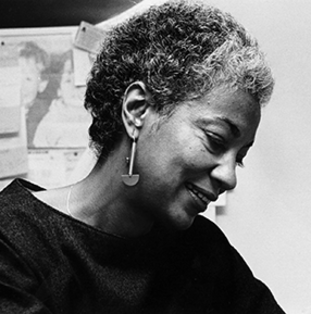
Rock on, Rock on, June Jordan; go!
Write on, write on, we feel your pain!
You spit some lines against the Man,
And the Man buys them back again.

And your bad poems become a joke
A poorly-punctuated whine
Insulting readers— and the Muse;
An unpoetic party-line.

The trashy verse you vomit forth:
Makes poets nauseous at your name.
Your screeds are easy to ignore,
And makes one doubtful of your fame.


June Jordan
HEAP the DIRT !

This Old Poem #3:

June Jordan’s April 10, 1999

Copyright © by Dan Schneider, 7/6/02

Ok. Now that I addressed another prompt hurled at me by the NaPoWriMo Matriarchy, I can post one of my own off–prompt.