It may be foreseen in like manner that poets living in democratic times will prefer the delineation of passions and ideas to that of persons and achievements. The language, the dress, and the daily actions of men in democracies are repugnant to conceptions of the ideal. These things are not poetical in themselves; and if it were otherwise, they would cease to be so, because they are too familiar to all those to whom the poet would speak of them. This forces the poet constantly to search below the external surface which is palpable to the senses, in order to read the inner soul; and nothing lends itself more to the delineation of the ideal than the scrutiny of the hidden depths in the immaterial nature of man. I need not traverse earth and sky to discover a wondrous object woven of contrasts, of infinite greatness and littleness, of intense gloom and amazing brightness, capable at once of exciting pity, admiration, terror, contempt. I have only to look at myself. Man springs out of nothing, crosses time, and disappears forever in the bosom of God; he is seen but for a moment, wandering on the verge of the two abysses, and there he is lost.

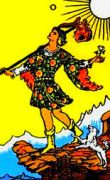

Alexis De Tocqueville: Democracy in America, published 1835–1840
 ƇƟƝŇƸƇƮĦƟƟƘ