Today we celebrate inclusive spirituality. Very soon, citizens of many nations will join together to affirm light and love as candles of devotion are lit in sacred spaces. On this day, the blessings of family and friendship are recognized among all races and faiths. Humankind lifts its collective soul to the universe, spreading light and positivity to all people everywhere. United in love, we envision and create a future of harmonious vibrations, firmly-grounded in the illuminating truth that there are many paths to spirituality and all seekers of spiritual Wisdom find her in the end. Whatever is true for you is real. Today is an important day for ALL faiths, all contemplative souls seeking Unity through intentionality, centered mindfulness and meditation.
On this and every day, those who passively ignore or actively reject the lordship of Christ will believe all kinds of similar crazy nonsense…
I must respond to some aspect of today’s prompt so I can say I faithfully discharged my lyrical duty.
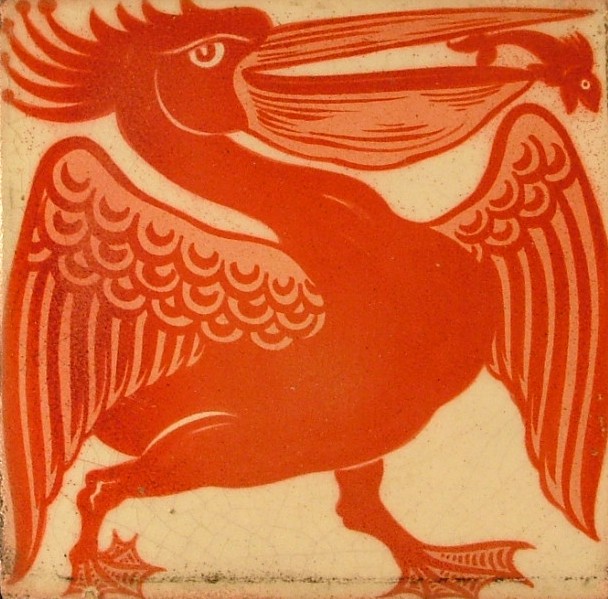
Our resource today is Oxford’s Ashmolean Museum, where you can find
a smug ceramic pelican, a samurai’s ceremonial suit of armor,
and a photograph of the French impressionist painter Camille Pissarro
dressed as a Venezuelan herdsman.
Must we dwell on French impressionist painters dressed as a Venezuelan herdsmen to get in a poetic mood for this, this PELICAN?? This feathered postmodern freak, this strutting usurper, this oppressor of . . . FISH ?
Stylized fowl, this avian emissary, this BEAST;
does it consume, offer, or regurgitate
the pathetic little fish ?
The dawn is nigh at hand. The clouds
begin to lift above the grange.
Arise, O Phoebus, bless the crowds –
let poultry roam the range.
I’ll bind a broom of gathered hay
to sweep the hen-house free of hate.
Let roosters hail the crack of day
and chicks with cocks tempt fate.
A fractured self and a challenge hurled:
they left the shell – but found it rough
because our bigoted barnyard world
cannot get queer enough fast enough.
They flutter through the breeder’s farm
subverting gender’s useless role.
We feel their pain, and mean no harm –
yet question this progressive goal.
They cluck a brand-new barnyard song: Gender Identity Obsolete!
(As long as they claim God hatched them wrong,
biology signals their defeat.)
While poultry scratches rhymes for “hen”
and chicks are combing crests for cocks
let’s ring the dinner bell and then
we’ll synchronize the global clocks.
Let Mankind’s unmanned race delight
at Jesus’ gender-free return.
Soon Africa shall see the light
and Araby’s sun more brightly burn.
Then dawn shall break o’er Russian plains
to liberate the Tartar races;
loose their limbs from Gender’s chains
to stride with polymorphous paces.
China too, and Southeast Asia
swift shall follow in their train
celebrating sex-aphasia
joining in the West’s refrain.
Hindu multitudes will rise
to vanquish gender, caste aside
and shake the slumber from their eyes
with metro-ambisexual pride.
Carib isles, with Latin kingdoms
From the tropics to the mountains
Shall announce they too are Wisdom’s,
drinking from de-gendered fountains.
Juveniles, raised to simply be
shall pioneer new modes of life;
explore horizons happily
set free from biologic strife.
Then shall our earth, in glad array
spade dirt upon Tradition’s tomb;
unshackled from that dark dismay
to grieve – but nevermore exhume.
Alas, the global dreams descend.
We’re back in the barnyard, gender-queer…
where hens have cocks and eggshells bend
transcending Nature’s reign of fear.
The henhouse still votes hetero –
their eggless chickens cluck for rights
biologists, ex utero
are born to further futile flights.
The Fowl is Fair
We live in times of innovation.
Winds of change affront the nation;
wind most welcome—by a few
(the masses know not what to do
with engineered progressive change,
their morals slow to rearrange).
And thus, in ornithology
we find an apt analogy…
Phoenix-like the vulture rose
in rainbow raiment, from repose
Its plumage all askew, a freak:
a mutant with a painted beak
borne of winds but lately blown.
This strange new hybrid (yet unflown)
did twitter forth an avian boon.
It preened its plumes and croaked a tune:
I represent that rarest fowl, far wiser than outmoded owl… A dazzling swan of change am I brought forth to liberate the sky!
(Yet more appeared a fractured emu;
fair is fowl post-op… they tried to
cross said emu with an ostrich!
(What the hell—the surgeon got rich
changing apples into mangos;
altering the twos to tangos…)
Fresh from gender suicide
he moulted into she. Beside
herself (itself?) with grief, regarded
previous selves as false: discarded
Sir for Madam overnight;
fixed it, mixed it, made it right.
Since God was wrong the first time ‘round,
Man (or something) thus is bound
hormonally to tweak and mutate,
hastening rebirth’s freakish due-date.
A manly bass—and yet the face
was poorly paired in his/her case
Soprano ought to have resounded;
yet the voice left one confounded.
Rainbow bracelets notwithstanding
this was clearly modern branding
(on the forehead—like a beast?)
well, Jesus told the truth at least:
that angels are of neither gender
(hence no need to check the member.)
Lest we offend endangered species
I commend transgendered theses—
paired with warning and a fable
as they turn the feathered table:
We may nurture fair to foul
while nature shrieks a hideous howl
but foul to fair cannot return;
thus trapped, both Eve and Adam burn.