Ten More Hello Poetry Hits

I recently posted my Top-Ten smash hits from Hello Poetry

Here are my next ten most-read hits from the website.
Number 3 (…Airbags) had stanzas printed in August 2016 New Yorker mag!

They start at 7K views (Fake News . . . ) but drop off fast to 4K (Autumn Festival).

Y’all come on over and boost my stats, hear?

  1. Fake News Wets Bed

  2. Owed to a Caulk Gun

  3. Dual Airbags

  4. Christ Massed

  5. Ω Gothic Postcard Ω

  6. Santería

  7. Selection of Sex and Descent in Relation to Man

  8. Take a Tip

  9. Licked, Stamped, Undelivered

  10. Autumn Festival: Lotus Seed

Someone Else

The loves of my childhood and youth were for the most part purely romantic obsessions which fuel and inspire my soul to this day. Until the end of 9th grade, I had never kissed a girl. The most magical of my loves were the earliest, the most sublimated—and the most childish.

In 1976 my family moved to East Africa where I attended school with students from all over the world. From the swelter of America’s Bicentennial Disco summer I was transplanted to live in Kenya. ABBA was topping the charts as I fell hard for the Nordic girls in 8th Grade. It was still a sublimated yearning type of affair, the truth is I had not even reached puberty yet; my late-blooming mind was unable to assimilate these Scandinavian maidens. They had wild names that evoked Varangian longships and fjords in morning mist: Inga Johanssen, Erika Skudal, Kristen Hafstad, and Else-Merete of the red-gold hair. I had schoolboy crushes on most of them, but it was more a sense of awe and pre-pubescent infatuation. Sometime at the start of 9th grade, my second year at the school, I noticed a rare creature on the schoolbus. I recall her silky shirt and her slender face. I can’t recall quite what it was. . . but this new girl made a massive impression on me. I learned that her name was Else and she was Norwegian. She was one year behind me, in 8th grade, so I only caught glimpses of her here and there around campus, yet she seemed to have cast some sort of spell on my soul. She awakened a hormonal interest that had lain dormant until her arrival. Yet, I rarely saw her and had no chance to even utter a word to her. I knew I was leaving that school next year. My unspoken longings intensified. Many of my cohort were already getting high, talking locker-room raunch and making out at parentless parties I never attended, but I was still an earnest, skinny youth.

Then, at the end of that year, it all came together. One day I found a note slipped into my locker: You are a cute boy. I was elated and panic-stricken all at once. It turned out that Else and her Ethiopian friend had put the note there. Someone told me: she likes you. I think I asked her friend about this. I remember some girlish giggling and the onset of a long and intense euphoria. I wound up slow-dancing and making out with her at the last dance of the year. I still couldn’t believe she liked me. I became aware at close range of her beauty. I went out with her to a movie where I held her hand: rocket to Venus.

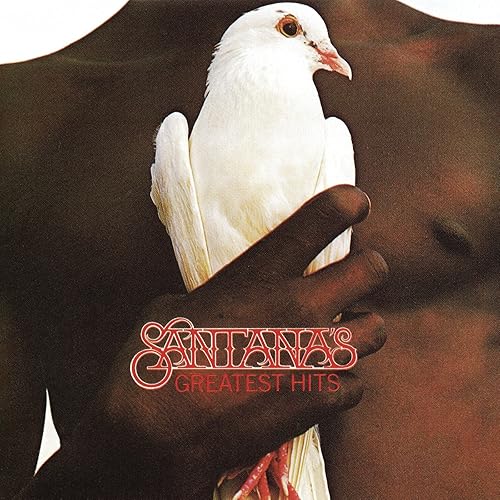
We made out some more on her sofa. She lent me her older brother’s records. Because of Else, I will adore Santana’s Greatest Hits (white dove on black breasthttps://m.media-amazon.com/images/I/91AbPrpoYXL._SS500_.jpg) unto the grave and beyond. I listened to Queen’s Day at the Races over and over, just because it was lent to me by her. I still think of her when I hear ‘Drowse’ and ‘Tie Your Mother Down’.
A Nairobi vignette: The first time I got dropped off at her home near Westlands for dinner, I was met at the door by her younger brother, who was about 6 or 7. He scowled up at me and pointing, said: You—Pakistan. It took a while for me to grasp that he thought I was Pakistani. Soon after that hostile welcome, Else told me in a fearful hush that she had noticed something strange.

Come up on the roof with me, she whispered.

We crawled out of a window of her home, which was one in a line of contiguous tract-style ranch houses with small low-walled courtyards in each adjoining house. She pointed down to an irregular dark blot on the ground of the neighboring yard as she spoke:

The people who live next to us are African. There used to be a dog constantly barking, every day and all night. But a day ago it became completely silent. I think that is the dog’s skin there.

I craned my neck to peer into the silent courtyard of Else’s neighbors. The dark blot was indeed something like a freshly flayed animal skin pegged-out around the edges to dry on the grass . . . maybe they were not African. Maybe they were Korean. But I know what I saw.

Else’s Icelandic mother offered me some unfamiliar food, I think it was fish in some sort of dill-sauce. Else’s father told me his daughter had been sleepwalking recently; they had found her gathering things from her closet after midnight. When asked what she was doing she had answered, somnambulistically, that she was going somewhere with me. I soon left Africa to begin 10th grade at a boarding school in New England.

When I saw her again at Christmas vacation, 3 continents and 6 months later, the magic was gone. I had become a self-conscious zit-faced adolescent geek and she was going out with her Ethiopian friend’s older brother.
Californian Emmy

The loves of my childhood and youth were for the most part purely romantic obsessions which fuel and inspire my soul to this day. Until the end of 9th grade, I had never even kissed a girl. The most magical of my loves were the earliest, the most sublimated—and the most childish.

In 1972 a secret love began smoldering deep within my Fourth grade soul. A new girl, Emmy, had joined our class in the first weeks of September. She was unremarkable; pleasant and present. It became known that she was from distant and mysterious California, a state I knew nothing about. As the first weeks of school became months, I found myself strangely attracted to this new arrival from distant coasts. I don’t know why Emmy B. made such an impression on me. I recall intense details about her: light brown wavy hair, a silvery laugh, and a slight accent, indefinable, something that set her apart from the New England kids in the cohort I had known since preschool. California began to appeal to me in some vague exotic way; notable because Emmy was from there. Her name began to take on significance and magic. I began to notice what she wore, how she smiled, what kind of jokes she made.

This was the first time I got a ten-speed bike. It was a Christmas gift, and it seemed to me a very extravagant thing. The down-curved handlebars and the dual stick-shifts really had me dazzled. I remember I had coveted this bike at the store and probably pestered my parents about buying it for me. It cost in dollars something close to the date of that romantic year of ’72, which seemed an impossibly high price to my mind. Later, as spring warmed the Northeast, kids began biking to school. It seemed noteworthy that Emmy B. rode a Motobecane racing bike, another exotic name I always associate with her in memory. My friend once mocked her by calling it a motor-pecan, and I flinched at this callous outrage.

It must be partly due to Emmy that I developed a love of rhyming poetry. Miss Prescott had asked all of us to memorize a poem. It may have been in late winter, I’m not sure. I chose Tennyson’s The Eagle, mainly because it was short but I also liked the sound of it. Emmy had developed an inseparable bond with another girl; it was one of those grade-school best-friendships where the two students are so often together their names meld into one, in this case DebbyandEmmy. They requested permission to memorize their poem together. Finally the week of recitation arrived. I had no problem rattling off my six lines of avian intensity . . . but later, Debby&Emmy blew the whole class away. They stood up and flawlessly intoned Alfred Noyes Highwayman in its entirety. I can still see them before the grey-green board and smell the chalk-dust of that hallowed moment. Those two girls looked us all in the eye, stated title and author, then launched into it, every galloping rolling stanza. I had never heard of it. I can never forget it. They did the whole thing from memory.

We presented a Greek drama that spring outdoors in a sacred grove .
It was the abduction of Persephone to the underworld by Hades.  I was Hades. https://images.designtrends.com/wp-content/uploads/2016/03/19111441/Retro-Greek-Pattern-Background.jpg
I think Emmy was Persephone but she might have been Demeter or a member of the chorus, not sure. The fact that I remember her as Persephone to my Hades says a lot. In any case, I recall adoring her in her chiton. As spring grew warmer, Emmy started wearing these embroidered girl-shorts to school. I have a distinct visual memory of the floral designs along the hem. By this time, I was smitten. I found her very . . . fascinating. She had said she was moving back to California at the end of the year. I learned that she lived on Appleton Street, about ten blocks away. That name began to conjure up magic in my fourth grade soul. Sometimes I would ride my bike past her home, a grey house with high walls enclosing a shady yard. With racing heart, pedaling past those high barriers, I would think to myself: somewhere inside that house lives Emmy, the mysterious Californian whom I adore. The place held my soul in bondage and enchantment. But I knew she was leaving in June and would not be in fifth grade with all of us.

When school ended that year, after the Mayday celebration and with the plaintive melodies still ringing, the reality that Emmy was leaving hit me very hard. I had not even said goodbye and now school was over. I rode my bike alone past her house, but did not know if they had already moved out. A great melancholy overwhelmed my mind. I never saw her again. I sometimes pray for her still.

Cutting Nutmeg

CT sigillum
Qui Transtulit Sustinet ! Motto of light!
‘Neath the folds of that banner we strike for the right;
Connecticut’s watchword oer hill and o’er plain,
The Hand that transplanted, that Hand will sustain.
S. S. Weld

There sat CONNECTICUT, a twit
blue nanny-state, and doomed to sit
on welfare-warrens of the damned
her social service on demand.
She withers on NEW ENGLAND‘s vine
a bygone has-been, and a sign
of democratic overkill
where her once-dear and verdant rill
now stagnant flows: polluted stream
a moribund New England dream.
The richest state with poorest heart:
the Northeast’s saddest story. Part
of history’s renowned revival,
now irrelevant. Survival
chains her children in dependence
keeping back the state’s ascendance.
Apostate Puritan, grown old—
for LIBERTY, no longer bold;
a slave to Man, where once God’s WORD
awakened greatness. Souls were stirred
in ENFIELD (of all strange places),
Christ beheld in radiant faces . . .
Edwards held their spellbound souls
like spiders over flaming coals,
in gratitude for Gospel grace
renewing thus both town and race.
But I digress. Connecticut
is what I came to speak about:
forgotten dull colonial matron
yoked in failure, plebe as patron
nostalgic for her Charter Oak
whose deadwood limbs went up in smoke
along with dark tobacco wrap
while the plantation took a nap.
Her social programs overgrowth
pose forest fire-risk. Under oath
her public servants signal virtue;
sign which really should alert you
to the democrat-machine’s
impending failure (ways and means).
Nutmeg-addled Tax-and-spenders,
dollar drunks on welfare benders
widen economic rifts;
force single moms toward double shifts
while Latin Kings hold court in prison
waiting out their royal season:
fiscally unsustainable—
yet totally explainable
(nutmeg is a drug for witches
spendthrift warlocks, bankrupt bitches).
Oh HARTFORD, city of the dead
which dies at five, then home to bed,
insurance once assured your rise;
but now your ghosts haunt sadder skies.
Your life displaced, outsourced, out-dated;
so, it seems, your fall was fated.
Meanwhile, close to New York City,
fairer fields are growing pretty
long on corporate commutes.
Data-driven growth computes
as data-drivers flood the roads
and enter by Manhattan-loads
from golden coasts’ Atlantic shores
and posh patrician golden doors
to bite the apple of our time:
a number-cruncher built on crime.
New England’s puritannic granny
(data-driven tyrant tranny)
seeks to harbor tropic isles
with blandly bureaucratic smiles.
Your poor dear heart cannot afford
to welcome every island lord
who looks to better his estate
and so decides to emigrate.
Displaced Jamaicans outta yard
compel the soft verse to get hard.
Boricua separatists, dispersed
show nationalities reversed
and dwell between two foreign lands
in Spanglish no one understands.
Such nutmeg gets the covens high
to soar the stormy Liberal sky.
It’s Yankee hubris: condescension
taxing plebes for such dissension.
Though you connect, there I would cut,
excising from New England’s gut
metastasizing social tumors:
clueless and obese consumers,
teenage moms, pajama-clad
whose nenes wait in vain for dad.
QUI TRANSTULIT SUSTINET—truth . . .
but that was was in our nation’s youth.
She’s gotten worse with passing years
confirming citizens’ worst fears;
showing her colors every vote
her monotone, a droning note
on which the blue-bloods hang their hue
when hope and change are overdue.
Her atheist zeal meets Yankee pride:
a most progressive broomstick ride;
oblivious to her Christian past,
an enemy of God at last.


Senryu and Haikai:
Basho-san, can you get me
another beer, please?
