A Psalm of Roxy

Can pop music reach empyrean heights
and move the fallen human soul toward God?

Most often, when pop music tries to do this the results are abysmal. Yet, once in a while, a rock’n’roll song brings heaven down into our vale of tears (or launches us toward the throne of the Creator). Depending on one’s personal taste in music, this can be very subjective, I know. One man’s high art is another’s velvet painting . . .

I bring you two versions of Psalm by the 70’s glam-rock band Roxy Music.
This song has always intrigued me.

First the original studio version from the album Stranded (1973).  It builds slowly, the rhythm becoming more insistent, with the London Welsh Male Choir singing as the song crescendos to its finish. The rhythm of this composition has always made me think of those New Orleans jazz funerals (go to 5-minute mark for the rhythm) or Creole-Indian Mardi-Gras parade struts: a sort of stuttering syncopated marching-band beat on the snare, much like Dr. John’s version of Junco Partner.

I have sometimes wondered whether Ferry was affecting the persona of a Bible-believer in this song for purposes of  irony or mockery. But after pondering the lyrics to many of his other songs [like Triptych or In Every Dreamhome a Heartache] I get the sense that  this is a straightforward heartfelt song.  I guess only Bryan Ferry and the Lord  know for sure.

Try on your love / like a new dress
The fit and the cut / your friends to impress
Try on your smile, square on your face
Showing affection should be no disgrace

Try out your God / hope He will send
Kindness from strangers on whom you depend
Try on His coat; a mantle most fine
Myriad colours: his harmony-thine

Believe in me once seemed a good line
Now belief in Jesus is faith more sublime
Head in the clouds, but I can’t see the Lord
Short of perfection . . . I’ll try to be good.

I’ll stand at His gate / I’ll wait for His sign
Then I’ll walk in His garden when it’s my time
Drink from His cup . . . hush now, don’t you cry
His quiet waters w
ill never never run dry
Nearing death’s vale; he’s here by my side
He leads me to paradise: a mountain so high, high, high high high…

(Instrumental)

Don’t be afraid. Just treasure His word
Singing His praises; I know that I’ll be heard
He’s going to take you by the hand.
He’s gonna make you feel so good
Open up your eyes—and then you’ll see all that you should
Forget all your troubles; you will feel no pain

He’s all that you need. He’s our everything
When I’m feeling all at sea, and deliverance is that distant shore
I will not be worried. Someday His house will be my home
For ever more . . .  for ever more . . .   for ever more . . .    for ever more

For ever more . . .

Compare this track to the live version below. Bryan Ferry enunciates every word clearly; the band members play with totally relaxed precision. The song is all about God.  Wow.  There is not much Rock’n’Roll that reaches these heights […a mountain so high, high, high] and this is why Roxy Music is my all-time favorite band.

Is this at the level of liturgical chanting and holy high art? Definitely not. In fact the first few lines introduce an element of  campy glam-fashion superficiality that is at odds with the rest of the lyrics.

A beautiful song, and to me, truly heavenly Rock’n’Roll.

This song is poetry.

Snow-Bound

John Greenleaf Whittier‘s most famous poem Snow-Bound,
is posted in the  Americana page above.

I recently found an 1897 copy of Whittier’s works printed for Houghton Mifflin by the Riverside Press in Cambridge, MA. The book was on the used book rack at my local supermarket and cost one dollar.  I had no idea how extensive Whittier’s output was. I also learned that he was a Quaker and an ardent abolitionist.

Snow-Bound is a long regional poem—but worth reading, especially if you know rural New England in winter.  And although it is regional, it is also global in its scope.  Wait until you are in the right mood. Until then, you can peruse the first few stanzas. If  your attention wanes,  go to the end and read the last stanzas.  You can always get to know this poem  section by section.

I love the description of the family friend, that …not unfeared, half welcome guest of a certain pard-like, treacherous grace who had been to Lebanon.

In the author’s  dedication he  says the following about the above-mentioned friend on p. 398 of my edition.   She was:

“…Harriet Livermore…of New Hampshire, a young woman of fine natural ability, enthusiastic, eccentric, with slight control over her violent temper , which sometimes made her religious profession doubtful. She was equally ready to exhort in school-house prayer meetings and dance in a Washington ball-room, while her father was a member of congress. She early embraced the doctrine of the Second Advent, and felt it her duty to proclaim the Lord’s speedy coming. With this message she crossed the Atlantic and spent the greater part of a long life in travelling over Europe and Asia. She lived some time with Lady Hester Stanhope, a woman as fantastic and mentally strained as herself, on the slope of Mt. Lebanon, but finally quarrelled with her in regard to two white horses with red marks on their backs which suggested the idea of saddles, on which her titled hostess expected to ride into Jerusalem with the Lord. A friend of mine found her, when quite an old woman, wandering in Syria with a tribe of Arabs, who with the Oriental notion that madness is inspiration, accepted her as their prophetess and leader. At the time referred to in Snow-Bound she was boarding at the Rocks Village about two miles from us.”

This description of Miss Livermore has greatly added to my appreciation of Snow-Bound. The poem was a best-seller back in the day, and earned  both money and nation-wide recognition for J.G. Whittier. There are so many lines of this poem that I could bring before you.  But I will leave you with these:

“Clasp, Angel of the backward look

And folded wings of ashen gray

And voice of echoes far away,

The brazen covers of thy book;

The weird palimpsest old and vast,

Wherein thou hid’st the spectral past;

Where, closely mingling, pale and glow

The characters of joy and woe;

The monographs of outlived years,

Or smile-illumed or dim with tears,

Green hills of life that slope to death,

And haunts of home, whose vistaed trees

Shade off to mournful cypresses

With the white amaranths underneath.”

That’s definitely  poetry.
Time to look up the word “palimpsest

Satta Massagana

Means  “give thanks” in Amharic.

An Ethiopian graduate student lived with us in  the early 70’s.  She was very sweet and fun to be around. I was about 9 or 10  at the time. Maybe that is why I have always had a crush on Ethiopia. Ethiopia, did you hear me just now?  I still love you, girl. The wife understands – it’s OK.  Let’s be friends.

I love Ethiopian food. I love how they serve coffee with incense.  I love how they wear white robes in their Orthodox Church services.
This gets complicated very quickly.  You see, I also love Ethiopia because she was one of the first nations to receive the Gospel. Then there is the whole Biblical tie-in with Rastafari. It’s impossible to immerse yourself  in Roots music without eventually idealizing Ethiopia as Zion. Even if you’re a white boy. I know that is patriarchal of me – I’m so sorry, ladies.  I know it’s not fair to put Ethiopia on that pedestal (she’s just a woman, right?).
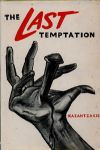
Actually, if you read the end of Kazantzakis’ fantastic novel The Last Temptation of Christ, Lucifer appears to Jesus on the cross as a beautiful Ethiopian cherub/seraph (they changed it in Scorsese’s film). It  just gets more and more complicated – sort of like a woman. Architecturally, artistically, gastronomically, theologically, rhythmically, I am fascinated by Ethiopia. Did you know that Ethiopia is the first nation mentioned by name in Genesis? I think God likes Ethiopia too (remember Moses’ wife…).
He even favored her BEFORE the flood. That’s antediluvian love, people.

Of course it’s not because their women are so lovely to behold, no.
But that is a bonus…

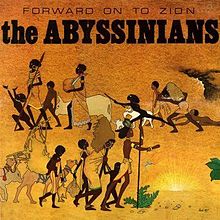
Today I want you to hear Satta Massagana by the Abyssinians, first recorded in 1969.

I could write pages on this stuff: Kazantzakis’ novel (all Christians need to read it!) which few of those who railed against the 1988 film even knew had been written in 1953), the glories of Abyssinia/Ethiopia/Kush, the antediluvian world, Roots Rock Reggae…but now you need to hear the music. It’s all about

“…a land far, far away / where there is no night / there is only day –
Look into the Book of Life and you will see
That  He /  He rules us all…”

(And this too is poetry).

A Deuce of O.B.E.s

OK  – I realize that I am addicted to working on this blog, primitive as it is. Compared to other addictive tendencies I possess, this one is positive and therapeutic – so I better go with it.    Come with me.

This is a decentralized poetry blog. For me, poetry should be finely wrought, highly structured, rhythmic, rhyming mystery.  I also prefer a clear, enduring message in poetry rather than ephemeral observations or frivolous meanderings. Mystery conveying clear messages…hmmmm.  Poetic preferences  get harder to pin down as we try to define them.

I also  don’t want to go where Pablo Saborio goes. As an ex-Nihilist (yes, I am a Christian who still reads Nietzsche) I can say that I really like the graphic style of his blog, but there is too much word-collage and dark verborrhea there  for my taste. My island of intensity is situated in other seas and uncharted archipelagos.

What you are likely to find on my island of intensity: disjunctures, 17th/18th century poetry, musings on the lost civilization of Atlantis, semi-coherent superficial references to the Rhizomatic philosophy of Deleuze & Guattari , death-trips and resurrection epiphanies, highbrow, lowbrow, pop, surreal and psycho-art, rock’n’roll, Rastafari, delusions of grandeur with undercurrents of self-loathing,  smatterings of Romance language, our Lord and Savior Jesus Christ, etc.

Therefore, in the name of Poetry, today I bring you two Out of Body Experiences [OBEs].  (Isn’t that what good poetry should do – take us out of our bodies?)  Those of you who dismiss such things TURN BACK NOW.  You are not meant to be here. Go check out that cooking blog, or  scan the sports pages, OK?

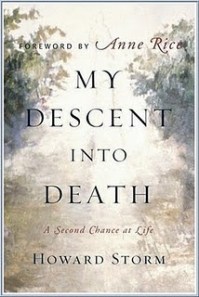
The first is Howard Storm. Have you ever read a book that spoke so insightfully to you that you felt like buying a case from the publisher to distribute to all your friends? My Descent Into Death is one of those. Storm was an art history professor,  artist, and a declared atheist  – until a perforated ulcer in the City of Light took him down to hell, then up to Heaven, with the result that he became a  pastor. You can find many interviews with him on YouTube. They are highly recommended. Anne Rice [of vampire fame]wrote the foreword. You can read a lot of excerpts here. I return to this book over and over when overwhelmed with despair. Please read it.

The second is that of Ian McCormack. He was a New Zealander, and a surf bum, riding the wave of an Endless Summer existence – until he got stung five times by  Box Jellyfish.            One sting can be lethal to a grown adult. Here is a link to his testimony. It is an amazing read.   People – if  this stuff is true, if  these two men really lived these experiences, then a great reevaluation of the very foundations of our lives is called for. You can try to ignore these things but they are out there – these are only two OBEs. There are endless testimonies of this type.

Are you living your life today in light of Eternity – the absolute reality of eternity? Are you hoping it’s all just chemical dissociation due to physical stress? Do you immediately mock those who bring us these reports?

Yes – I AM preaching. Preaching is also a valuable form of poetry.

Preaching is a highly  esteemed art on my island of intensity.          Have a nice eternity.