Burning Hell: Doom
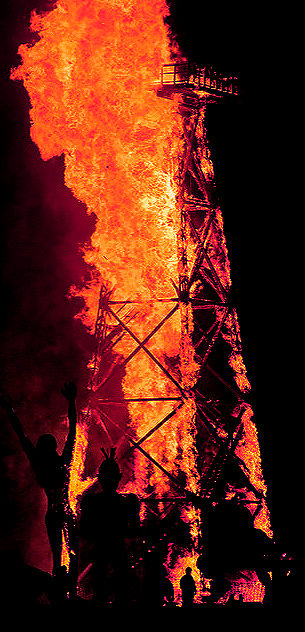
Michael Wigglesworth (1631—1705)
It is put in Execution.
CCVI.
That word “Depart,” maugre their heart,
drives every wicked one,
With mighty pow’r, the self-same hour,
far from the Judge’s Throne.
Away they’re chas’d by the strong blast
of his Death-threat’ning mouth;
They flee full fast, as if in haste,
although they be full loath.
CCVII.
As chaff that’s dry, as dust doth fly
before the Northern wind.
Right so are they chaséd away,
and can no Refuge find.
They hasten to the Pit of Woe,
guarded by Angels stout.
Who to fulfil Christ’s holy Will,
attend this wickéd Rout;
HELL.
CCVIII.
Whom having brought as they are taught,
unto the brink of Hell,
(That dismal place, far from Christ’s face,
where Death and Darkness dwell,
Where God’s fierce Ire kindleth the fire,
and vengeance feeds the flame.
With piles of Wood and Brimstone Flood,
so none can quench the same,)
Magic Potion
Behold, an Israelite Indeed
https://www.bitchute.com/video/GQ6EYLLTz08f/
The following day Jesus wanted to go to Galilee, and He found Philip and said to him, “Follow Me.” Now Philip was from Bethsaida, the city of Andrew and Peter. Philip found Nathanael and said to him, “We have found Him of whom Moses in the law, and also the prophets, wrote—Jesus of Nazareth, the son of Joseph.”
And Nathanael said to him, “Can anything good come out of Nazareth?”
Philip said to him, “Come and see.”
Jesus saw Nathanael coming toward Him, and said of him,
“Behold, an Israelite indeed, in whom is no deceit!”
Nathanael said to Him, “How do You know me?”
Jesus answered and said to him,
“Before Philip called you, when you were under the fig tree, I saw you.”
Nathanael answered and said to Him,
“Rabbi, You are the Son of God! You are the King of Israel!”
Jesus answered and said to him,
“Because I said to you, ‘I saw you under the fig tree,’ do you believe? You will see greater things than these.” And He said to him, “Most assuredly, I say to you, hereafter you shall see heaven open, and the angels of God ascending and descending upon the Son of Man.”
 ƇƟƝŇƸƇƮĦƟƟƘ