The Self-righteous Rendered Invalid and Doomed

Michael Wigglesworth (1631—1705)

XCVI.

Then answeréd unto their dread,
the Judge: “True Piety
God doth desire and eke require,
no less than honesty.
Justice demands at all your hands
perfect Obedience;
If but in part you have come short,
that is a just offense.

XCVII.

“On Earth below, where men did owe
a thousand pounds and more.
Could twenty pence it recompense?
Could that have clear’d the score?
Think you to buy Felicity
with part of what’s due debt?
Or for desert of one small part,
the whole should off be set?

XCVIII.

“And yet that part whose great desert
you think to reach so far,
For your excuse doth you accuse,
and will your boasting mar.
However fair, however square
your way and work hath been
Before men’s eyes, yet God espies
iniquity therein.

XCIX.

“God looks upon th’ affecti-on
and temper of the heart;
Not only on the acti-on,
and the external part.
Whatever end vain men pretend,
God knows the verity,
And by the end which they intend
their words and deeds doth try.

C.

“Without true Faith, the Scripture saith,
God cannot take delight
In any deed that doth proceed
from any sinful wight.
And without love all actions prove
but barren empty things;
Dead works they be and vanity,
the which vexation brings.

CI.

“Nor from true Faith, which quencheth wrath,
hath your obedience flown;
Nor from true Love, which wont to move
Believers, hath it grown.
Your argument shews your intent
in all that you have done;
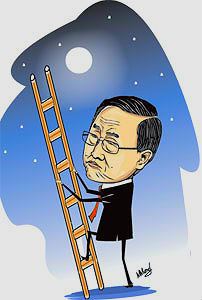
You thought to scale Heav’n’s lofty Wall
by Ladders of your own.
Mindfulness and Good Deeds

Michael Wigglesworth (1631—1705)


Civil honest men’s pleas.

XCII.

Then were brought nigh a Company
of Civil honest Men,
That lov’d true dealing and hated stealing,
ne’er wrong’d their Bretheren;
Who pleaded thus: “Thou knowest us
that we were blameless livers;
No Whoremongers, no Murderers,
no quarrelers nor strivers.

XCIII.

“Idolaters, Adulterers,
Church-robbers we were none,
Nor false dealers, nor cozeners,
but paid each man his own.
Our way was fair, our dealing square,
we were no wasteful spenders,
No lewd toss-pots, no drunken sots,
no scandalous offenders.

XCIV.

“We hated vice and set great price,
by virtuous conversation;
And by the same we got a name
and no small commendation.
God’s Laws express that righteousness
is that which he doth prize;
And to obey, as he doth say,
is more than sacrifice.

XCV.

“Thus to obey hath been our way;
let our good deeds, we pray,
Find some regard and some reward
with thee, Lord, this day.
And whereas we transgressors be,
of Adam’s race were none,
No, not the best, but have confess’d
themselves to have misdone.“

Another sort of Hypocrites make their pleas

Michael Wigglesworth (1631—1705)


LXXXI.

Then forth issue another Crew
(those being silencéd),
Who drawing nigh to the Most High,
adventure thus to plead:
“We sinners were,” say they, “’tis clear,
deserving condemnation;
But did not we rely on thee,
O Christ, for whole Salvation?

LXXXII.

“We did believe, and oft receive
thy gracious Promises;
We took great care to get a share
in endless Happiness.
We pray’d and wept, and Fast-days kept,
lewd ways we did eschew;
We joyful were thy Word to hear;
we form’d our lives anew.

LXXXIII.

“We thought our sin had pardon’d been,
that our Estate was good,
Our debts all paid, our peace well made,
our Souls wash’d with thy Blood.
Lord, why dost though reject us now,
who have not thee rejected,
Nor utterly true sanctity
and holy life neglected?“

XCI.

“Thus from yourselves unto yourselves,
your duties all do tend;
And as self-love the wheels doth move,
so in self-love they end.“
Thus Christ detects their vain projects,
and close Impiety,
And plainly shews that all their shows
were but Hypocrisy.

Fake Penitence: Doom

Michael Wigglesworth (1631—1705)
The Judge uneaseth them.

LXXXIV.

The Judge incens’d at their pretens’d
self-vaunting Piety,
With such a look as trembling strook
unto them made reply:
“O impudent, impenitent,
and guileful generation!
Think you that I cannot descry
your hearts’ abomination?

LXXXV.

“You nor receiv’d, nor yet believ’d
my Promises of Grace,
Nor were you wise enough to prize
my reconciléd Face;
But did presume that to assume
which was not yours to take,
And challengéd the Children’s Bread,
yet would not sin forsake.

LXXXVI.

“Being too bold you laid fast hold
where int’rest you had none,
Yourselves deceiving by your believing,
all which you might have known.
You ran away but ran astray
with Gospel Promises,
And perishéd, being still dead
in sins and trespasses.

LXXXVII.

“How oft did I Hypocrisy
and Hearts’ deceits unmask
Before your sight, giving you light
know a Christian’s task?
But you held fast unto the last
your own conceits so vain,
No warning could prevail; you would
your own Deceits retain.

LXXXVIII.

“As for your care to get a share
in Bliss; the fear of Hell,
And of a part in endless smart,
did thereunto compel.
Your holiness and ways redress,
such as it was, did spring
From no true love to things above,
But from some other thing.

LXXXIX.

“You pray’d and wept, you Fast-days kept,
but did you this to me?
No, but for sin you sought to win
the greater liberty.
For all your vaunts, you had vile haunts,
which for your Consciences
Did you alarm, whose voice to charm
you us’d these practices.

XC.

“Your Penitence, your diligence
to Read, to Pray, to Hear,
Were but to drown the clam’rous sound
of Conscience in your Ear.
If light you lov’d, vain glory mov’d
yourselves therewith to store,
That seeming wise men might you prize,
and honor you the more.