Bring on the Night


Nox Nocti Indicat Scientiam       

William Habington (1605 – 1654 )

WHEN I survey the bright
Celestial sphere;
So rich with jewels hung, that Night
Doth like an Ethiop bride appear:

My soul her wings doth spread
And heavenward flies,
Th’ Almighty’s mysteries to read
In the large volumes of the skies.

For the bright firmament
Shoots forth no flame
So silent, but is eloquent
In speaking the Creator’s name.

No unregarded star
Contracts its light
Into so small a character,
Removed far from our human sight,

But if we steadfast look
We shall discern
In it, as in some holy book,
How man may heavenly knowledge learn.

It tells the conqueror
That far-stretch’d power,
Which his proud dangers traffic for,
Is but the triumph of an hour:

That from the farthest North,
Some nation may,
Yet undiscover’d, issue forth,
And o’er his new-got conquest sway:

Some nation yet shut in
With hills of ice
May be let out to scourge his sin,
Till they shall equal him in vice.

And then they likewise shall
Their ruin have;
For as yourselves your empires fall,
And every kingdom hath a grave.

Thus those celestial fires,
Though seeming mute,
The fallacy of our desires
And all the pride of life confute:–

For they have watch’d since first
The World had birth:
And found sin in itself accurst,
And nothing permanent on Earth.


The Night

Henry Vaughn (1621-1695)

Face to face

Through that pure Virgin-shrine,
That sacred veil drawn o’er thy glorious noon
That men might look and live as glow-worms shine,
And face the moon:
Wise Nicodemus saw such light
As made him know his God by night.

Most blest believer he!
Who in that land of darkness and blind eyes
Thy long expected healing wings could see,
When thou didst rise,

And what can never more be done,
Did at mid-night speak with the Sun!

O who will tell me, where
He found thee at that dead and silent hour!
What hallowed solitary ground did bear
So rare a flower,
Within whose sacred leaves did lie
The fullness of the Deity.

No mercy-seat of gold,
No dead and dusty Cherub, nor carved stone,
But his own living works did my Lord hold
And lodge alone;
Where trees and herbs did watch and peep
And wonder, while the Jews did sleep.

Dear night! this world’s defeat;
The stop to busy fools; care’s check and curb;
The day of Spirits; my soul’s calm retreat
Which none disturb!
Christ’s progress, and his prayer time;
The hours to which high Heaven doth chime.

God’s silent, searching flight:
When my Lord’s head is filled with dew, and all
His locks are wet with the clear drops of night;
His still, soft call;
His knocking time; the soul’s dumb watch,
When Spirits their fair kindred catch.

Were all my loud, evil days
Calm and unhaunted as is thy dark Tent,
Whose peace but by some Angel’s wing or voice
Is seldom rent;
Then I in Heaven all the long year
Would keep, and never wander here.

But living where the sun
Doth all things wake, and where all mix and tire
Themselves and others, I consent and run
To every mire,
And by this world’s ill-guiding light,
Err more than I can do by night.

There is in God (some say)
A deep, but dazzling darkness; as men here
Say it is late and dusky, because they
See not all clear;
O for that night! where I in him
Might live invisible and dim.
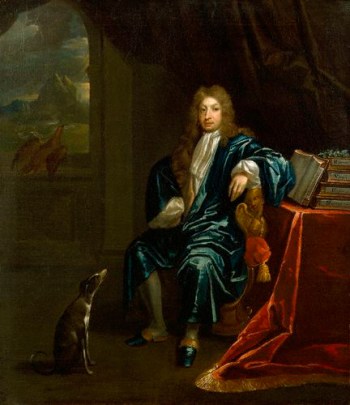
IMAGE CREDITS: Mirella Ricciardi
photography-now.com

Washed up and hung on the line to Dryden…

…Thy inoffensive satires never bite.
In thy felonious heart though venom lies,
It does but touch thy Irish pen, and dies.
Thy genius calls thee not to purchase fame
In keen iambics, but mild anagram.
Leave writing plays, and choose for thy command
Some peaceful province in acrostic land.
There thou mayst wings display and altars raise,
And torture one poor word ten thousand ways…

John Dryden: MacFlecknoe

Yes – it could be said of me and my scrawling.
(I dabble in acrostics as my long-suffering poetry acquaintances can testify).

John Dryden wrote lines 3 centuries ago that still sting poetasters like me.
It hurts so good.

He could have been writing part of my unapproved biography here  (just call me Zimri):

…In the first rank of these did Zimri stand:
A man so various, that he seem’d to be
Not one, but all Mankind’s Epitome.
Stiff in opinions, always in the wrong;
Was everything by starts, and nothing long:
But in the course of one revolving moon,
Was chemist, fiddler, statesman, and buffoon:
Then all for women, painting, rhyming, drinking;
Besides ten thousand freaks that died in thinking.
Blest madman, who could every hour employ,
With something new to wish, or to enjoy!
Railing and praising were his usual themes;
And both (to show his judgment) in extremes:
So over violent, or over civil,
That every man, with him, was god or devil…

 John Dryden: Absalom and Achitophel

John Dryden was a great poet. Not only could he write nasty satires about the political movers and shakers of his day thinly disguised as Old Testament history; he also wrote thunderous lyrics such as one of my all-time favorite poems  A Song For St. Cecelia’s Day, 1687.

Talk about a true Rock Star !  He was Poet Laureate of England for a while.

Dryden was born of Puritan parents and became an Anglican – only to convert to Roman Catholicism later in his life. We can forgive him for that.

You can learn way too much about his poetry here – really funny stuff, some of it.

I leave you with the celestially stupendous final lines of the above-mentioned Song for St. Cecelia:

♪♫  Grand Chorus  ♪♫♪

As from the power of sacred lays
The spheres began to move,
And sung the great Creator’s praise
To all the bless’d above;
So when the last and dreadful hour
This crumbling pageant shall devour,
The trumpet shall be heard on high,
The dead shall live, the living die,
And Music shall untune the sky.


Poor Tom

I just posted Tom O’Bedlam which I first encountered in the New Oxford Book of English Verse under the title Loving Mad Tom.  I learned a lot as I linked the page to interesting sites. I also recalled a book I read as a child where one character was feigning madness to spy on some people. He kept repeating “Puir Tam, Puir Tam, don’t hurt Puir Tam…”

I realize now that was a reference to the same persona.

If any of you read this story in your childhood, send me the name of it please. There seems to be a lot of Scottish tie-ins to this Poor Tom character. [Click on the link in the Chorus to see]

There is much obscure vocabulary in the poem, very specific to England in the 17th century. I never knew “Bedlam” was derived from the word Bethlehem. Like The Vicar of Bray, another great anonymous English poem, this one conjures up images from Hogarth’s etchings.

Gimme dat lyric, yo…

I like old-school lyrics. Meaning  from around 1685 or later.

Do you like poetry? What kind  – what poets?

I can’t stand most modern, academic esoteric intentionally cryptic free verse. Who reads that stuff anyway? Forget those weak little ditherings in the margin of New Yorker and Atlantic – how boring. And although I once believed in it, I grew out of stridently  political agit-prop years ago as well.  Give me real poetry please!

I was forced to analyze poetry in school and I resented it.  Maybe a few lines here and there [E.E. Cummings, Ogden Nash] were amusing but it was nothing I ever chose to read on my own. Years later I got turned on to French poets like Baudelaire, G. de Nerval, Rimbaud and others who had some great hypnotic rhythms and rhyme combined with astral imagery and intense feeling. I began to realize that I did like poetry – that kind at least. Later, stranded in the Arizona desert with the New Oxford Book of English Verse [1250-1950…new indeed!], I found great treasures. Many of them I have posted, and will continue to post here for your enjoyment.  I discovered that being alone in  the  desert was the ideal way to develop appreciation for poetry. This was in the late 80’s to mid 90’s before the age of cyber-connectivity had infected me.  After my mind cleared  from the barrage of  stimuli  considered  normal, I found that I was reading these old works with new perception. It was like actually communing with the mind of the writer, no matter how distant [or near] in time. It was a spiritual realization for me. Perhaps some of you have also experienced that realization – maybe you are so blessed that you don’t have to live in the desert as I had to reach that state of cerebral clarity. In this age of rampant pragmatism and commodified common-sense, it is almost shameful to confess that I love poetry.
Do you also hesitate before divulging your love of poetry?