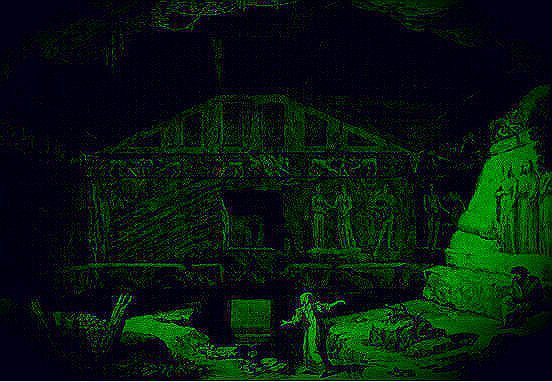
A CRYPT (from Ancient Greek κρύπτη (kryptē) crypta ‘vault’) is a stone chamber beneath the floor
of a church, above ground within a cemetery’s mausoleum or a free-standing outdoor memorial tomb.
It typically contains coffins, sarcophagi, or religious relics and sometimes cremation urns.
CRYPTOGRAPHY prior to the modern age was effectively synonymous with encryption,
converting readable information to unintelligible nonsense which can only be read by reversing the process (decryption).
The sender of an encrypted (coded) message shares the decryption (decoding) technique only with the intended recipients
to preclude access from adversaries.
Seeking for life beneath an arch,
Trying to crack the poetic curse,
A withered rose surprised my search:
Intentionally cryptic verse.
Her bone-dry petals, colorless
Upon my touch, dissolved to dust.
The dead stalk’s thorns, nevertheless
Pricked me, eliciting mistrust.
Where that rose lay I stumbled on a crypt
Filled with the bones of verses nondescript.
I had chanced upon a burial cave.
Whose sad remains reposed within that grave?
The rose was left to seal the codes:
Intentional obscurity.
Vapid means dull. Such verse forebodes
Lack of lyric security.
What I learned from my sepulchral gleaning:
That dead flower marked the death of meaning.
Refuse the rare and esoteric word
And verbiage that borders on absurd!
Poetic Decryption Key:
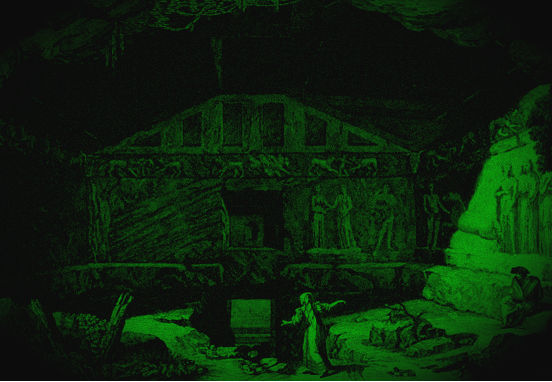
The Rose is the arch of a vaulted crypt
A mark on the map, directions in code…
The lyric sepulcher, on which I tripped,
Contained no golden motherload.
When poetry dies, then decomposes,
We’re left with poetic cryptography.
Symbolic signs such as crypts and roses
Challenge your dull cartography.
PROMPT # 25
write a poem using at least three metaphors (CRYPT/CODE/ROSE) for a single thing (POETRY).
Include an exclamation, ruminate on the definition of a word, and come back in the closing line
to the image or idea with which you opened the poem.


Bravo
LikeLiked by 1 person
💖🙏🛐🍀
LikeLike
I got a friend request today and I wasn’t sure if it was you or a hacker. It made me wonder if you still have a blog and whatever became of the one & only Mr. Hook. Your writing still makes me say, holy shit! I didn’t think you could better than you were 10 years ago, but somehow you are! Not sure how my name will appear here, btw, but you might recall belting out Abba hits with me in my Reggio fourth grade classroom. So…was that really you on Facebook? Or your lovely wife?
LikeLike
Merri P ! I prayed for you and Doug today while driving to Torrington (is that not where you are from?) and look what happens, I am privileged to hear from you.
BTW that was NOT me, it was a hacker. (Unless it is from 5 or more years ago…)
(My wife’s F-book got deleted and I do not lurk around on her new one.)
Yes, I have great memories of singing ABBA and All in the Family theme after straightening desks at Reggio. I still get weepy over ABBA songs after 3 beers… my kids grew up with ABBA and lots of other fantastic Boomer music I have inflicted upon them during their formtive years. I hope you are well. Thanks for connecting. Have you posted at T.E.A. recently?
LikeLike
I like this on a lot too. The modern irony of having to define what vapid means, the dumbing down of language, and the loss of meaning…our entire culture is in a meaning drought.
LikeLiked by 1 person
There shall be a famine for the Word of God.
LikeLiked by 1 person
I think there already is…my grandsons, when they were five or so years younger, said their generation was growing up in a spiritual depression and I think they’re right.
LikeLike