The men of Nineveh shall rise in judgment with this generation, and shall condemn it: because they repented at the preaching of Jonas; and, behold, a greater than Jonas is here.
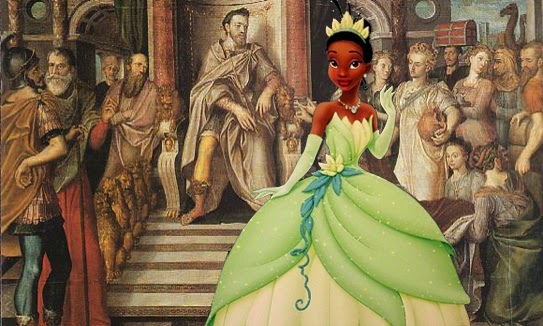
The queen of the south shall rise up in the judgment with this generation, and shall condemn it: for she came from the uttermost parts of the earth to hear the wisdom of Solomon; and, behold, a greater than Solomon is here.
WE cannot tell exactly who the Queen of the South was,
nor exactly where Sheba lay. The expression used is Yemen, the south. Yemen is the name of a part of Arabia Felix and it would appear from the spices which the Queen brought with her that she came from that region. At the same time, the Abyssinians claim her as having been their queen. They say that she was converted through her conversations with Solomon, that afterwards the faith of God was preserved in the country, and hence that that famous Ethiopian, who was a eunuch of great authority under Candace in later times, was a proselyte to the Jewish faith on account of that faith existing in Abyssinia.
A Greater Than Solomon [Sermon #3166 by Charles Spurgeon – published October 14, 1909] www.spurgeongems.org
And King Solomon gave to the queen of Sheba all that she desired, whatever she asked besides what was given her by the bounty of King Solomon. So she turned and went back to her own land with her servants. Now the weight of gold that came to Solomon in one year was 666 talents of gold, besides that which came from the explorers and from the business of the merchants, and from all the kings of the west and from the governors of the land.
1 Kings 10:13-15 [ESV]
No mention shall be made of coral, or of pearls: for the price of wisdom is above rubies. The topaz of Ethiopia shall not equal it,
neither shall it be valued with pure gold.
Job 28: 18-19 [KJV]
This calls for wisdom: let the one who has understanding
calculate the number of the beast, for it is the number of a man, and his number is 666.
…A damsel with a dulcimer In a vision once I saw: It was an Abyssinian maid, And on her dulcimer she played, Singing of Mount Abora. Could I revive within me Her symphony and song, To such a deep delight ‘twould win me, That with music loud and long, I would build that dome in air, That sunny dome! those caves of ice! And all who heard should see them there, And all should cry, Beware! Beware! His flashing eyes, his floating hair! Weave a circle round him thrice, And close your eyes with holy dread, For he on honey-dew hath fed, And drunk the milk of Paradise.
An Ethiopian graduate student lived with us in the early 70’s. She was very sweet and fun to be around. I was about 9 or 10 at the time. Maybe that is why I have always had a crush on Ethiopia. Ethiopia, did you hear me just now? I still love you, girl. The wife understands – it’s OK. Let’s be friends.
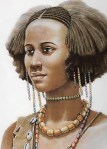
I love Ethiopian food. I love how they serve coffee with incense. I love how they wear white robes in their Orthodox Church services.
This gets complicated very quickly. You see, I also love Ethiopia because she was one of the first nations to receive the Gospel. Then there is the whole Biblical tie-in with Rastafari. It’s impossible to immerse yourself in Roots music without eventually idealizing Ethiopia as Zion. Even if you’re a white boy. I know that is patriarchal of me – I’m so sorry, ladies. I know it’s not fair to put Ethiopia on that pedestal (she’s just a woman, right?).
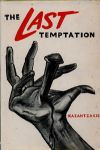
Actually, if you read the end of Kazantzakis’ fantastic novelThe Last Temptation of Christ, Lucifer appears to Jesus on the cross as a beautiful Ethiopian cherub/seraph (they changed it in Scorsese’s film). It just gets more and more complicated – sort of like a woman. Architecturally, artistically, gastronomically, theologically, rhythmically, I am fascinated by Ethiopia. Did you know that Ethiopia is the first nation mentioned by name in Genesis? I think God likes Ethiopia too (remember Moses’ wife…).
He even favored her BEFORE the flood. That’s antediluvian love, people.
Of course it’s not because their women are so lovely to behold, no.
But that is a bonus…
Today I want you to hear Satta Massagana by the Abyssinians, first recorded in 1969.
I could write pages on this stuff: Kazantzakis’ novel (all Christians need to read it!) which few of those who railed against the 1988 film even knew had been written in 1953), the glories of Abyssinia/Ethiopia/Kush, the antediluvian world, Roots Rock Reggae…but now you need to hear the music. It’s all about
“…a land far, far away / where there is no night / there is only day – Look into the Book of Life and you will see That He / He rules us all…”
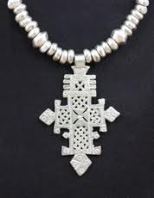
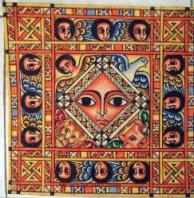



 I love Ethiopian food. I love how they serve coffee with incense. I love how they wear white robes in their Orthodox Church services.
 read the end of Kazantzakis’ fantastic novel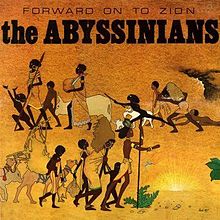
 CONNECT/HOOK