You Sinners Are

Michael Wigglesworth (1631—1705)
The free gift.

CLXXVII.

“I may deny you once to try,
or Grace to you to tender.
Though he finds Grace before my face
who was the chief offender;
Else should my Grace cease to be Grace,
for it would not be free,
If to release whom I should please
I have no liberty.

CLXXVIII.

“If upon one what’s due to none.
I frankly shall bestow,
And on the rest shall not think best
compassion’s skirt to throw,
Whom injure I? will you envy
and grudge at others’ weal?
Or me accuse, who do refuse
yourselves to help and heal ?

CLXXIX.

“Am I alone of what’s my own,
no Master or no Lord?
And if I am, how can you claim
what I to some afford?
Will you demand Grace at my hand,
and challenge what is mine?
Will you teach me whom to set free,
and thus my Grace confine?

CLXXX.

“You sinners are, and such a share
as sinners, may expect;
Such you shall have, for I do save
none but mine own Elect.
Yet to compare your sin with their
who liv’d a longer time,
I do confess yours is much less,
though every sin’s a crime.
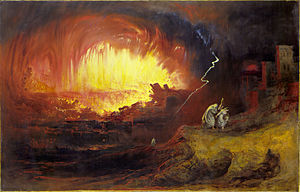
Judge Dread Answers: Doom


Michael Wigglesworth (1631—1705)
Their arguments taken off.

CLXXI.

Then answeréd the Judge most dread:
God doth such doom forbid,
That men should die eternally
for what they never did.
But what you call old Adam’s Fall,
and only his Trespass,
You call amiss to call it his,
both his and yours it was.

CLXXII.

“He was design’d of all Mankind
to be a public Head;
A common Root, whence all should shoot,
and stood in all their stead.
He stood and fell, did ill or well,
not for himself alone.
But for you all, who now his Fall
and trespass would disown.

CLXXIII.

“If he had stood, then all his brood
had been establishéd
In God’s true love never to move,
nor once awry to tread;
Then all his Race my Father’s Grace
should have enjoy’d for ever.
And wicked Sprites by subtile sleights
could them have harméd never.

CLXXIV.

Would you have griev’d to have receiv’d
through Adam so much good,
As had been your for evermore,
if he at first had stood?
Would you have said, ’We ne’er obey’d
nor did thy laws regard;
It ill befits with benefits,
us, Lord, to so reward?’

CLXXV.

“Since then to share in his welfare,
you could have been content,
You may with reason share in his treason,
and in the punishment.
Hence you were born in state forlorn,
with Natures so depravéd;
Death was your due because that yo
had thus yourselves behavéd.

CLXXVI.

“You think ’If we had been as he
whom God did so betrust,
We to our cost would ne’er have lost
all for a paltry lust.’
Had you been made in Adam’s stead,
you would like things have wrought,
And so into the self-same woe,
yourselves and yours have brought.


Hyper-Calvinistic Doom

Michael Wigglesworth (1631—1705)
Reprobate Infants plead for themselves.

CLXVI.

Then to the Bar all they drew near
Who died in infancy,
And never had or good or bad
effected pers’nally;
But from the womb unto the tomb
were straightway carriéd,
(Or at the least ere they transgress’d)
who thus began to plead:

CLXVII.

“If for our own transgressi-on,
or disobedience.
We here did stand at thy left hand,
just were the Recompense;
But Adam’s guilt our souls hath spilt,
his fault is charg’d upon us;
And that alone hath overthrown
and utterly undone us.

CLXVIII.

“Not we, but he ate of the Tree,
whose fruit was interdicted;
Yet on us all of his sad Fall
the punishment’s inflicted.
How could we sin that had not been,
or how is his sin our,
Without consent, which to prevent
we never had the pow’r?

CLXIX.

“O great Creator why was our Nature
depravéd and forlorn?
Why so defil’d, and made so vil’d,
whilst we were yet unborn?
If it be just, and needs we must
transgressors reckon’d be.
Thy Mercy, Lord, to us afford,
which sinners hath set free.

CLXX.

“Behold we see Adam set free,
and sav’d from his trespass,
Whose sinful Fall hath split us all,
and brought us to this pass.
Canst thou deny us once to try,
or Grace to us to tender,
When he finds grace before thy face,
who was the chief offender?“


Graphic from https://www.fugly.com/

How Came Your Mind To Be So Blind?

Michael Wigglesworth (1631—1705)
They are answered.

CLXI.

“But Nature’s light shin’d not so bright
to teach us the right way:
We might have lov’d it and well improv’d it,
and yet have gone astray.“
The Judge most High makes this Reply:
“You ignorance pretend.
Dimness of sight, and want of light,
your course Heav’nward to bend.

CLXII.

“How came your mind to be so blind?
I once you knowledge gave.
Clearness of sight and judgment light:
who did the same deprave?
If to your cost you have it lost,
and quite defac’d the same,
Your own desert hath caus’d the smart;
you ought not me to blame.

CLXIII.

“Yourselves into a pit of woe,
your own transgression led;
If I to none my Grace had shown
who had been injured?
If to a few, and not to you,
I shew’d a way of life,
My Grace so free, you clearly see,
gives you no ground of strife.

CLXIV.

“’Tis vain to tell, you wot fall well,
if you in time had known
Your misery and remedy,
your actions had it shown:
You, sinful Crew, have not been true
unto the Light of Nature,
Nor done the good you understood,
nor ownéd your Creator.

CLXV.

“He that the Light, because ’tis slight,
hath uséd to despise,
Would not the Light shining more bright,
be likely for to prize.
If you had lov’d, and well improv’d
your knowledge and dim sight,
Herein your pain had not been vain,
your plagues had been more light.“