Beastly Limericks Prompted

I’m lacking motivation for National Poetry Writing Month, April 2023.

The inane prompts will bring on paroxysms of poetry-rage… I already expect that.
But at least I can bring forth from my storehouse certain drafts I have had sitting around since last May, as well as attempt to follow some of the prompts.
This first one is tolerable enough:

Bonobos and Seahorses mate
in a very peculiar state.
First they raise up a flag—
then they dress up in drag
to attack and accuse and berate.

Let the rainbow resume its old role
Or we’ll have to call damage control;
It’s a sign from above;
Yes, it’s true God is love,
but He may not forgive your lost soul.


EARLY BIRD PROMPT:
write a poem that plays with the idea of a fun fact.
 

Impromptu: Trintanéscia


Hello, world citizens! GloBoHoMo 2023 is finally here, and we hope you are feeling lyrical and ready to speak words into poetic action.

Our featured poet today is Femi Abubakar whose stunning sub-Saharan verse has been curated by First Nations poet Harrison Tsinakut-O’odla for online journal Crowflake Dancer.

Founded in 2011, Crowflake Dancer publishes quarterly e-chapbooks, reaching over 17 readers, twelve of whom chair MFA Creative Writing programs. I would also like to point out Winifred Bong-Herschowitz’ poem “Menses Room” which I found tragically relevant, and Julio MacDougal’s poem “Woke As Mansplained By Those Who Never Picked Cotton,” which is a whimsical jab at privilege, power and poverty of alliteration.

And now, our prompt, from a bin of late-70s prompts I found behind a Goodwill parking lot. It is based on the idea that poetry is the random and meaningless juxtaposition of drivel.

The form itself is loosely based on the charming medieval Portuguese Trintanéscia. (Trinta means “thirty” in Portuguese). Here’s how you do it:

  1. Find a text and (gently, lovingly) rip 6 pages out.

  2. With scissors, cut out 6 nouns, 6 adjectives, 6 verbs and 6 prepositions as individual words.

  3. Write down 6 of your favorite foods on 6 small individual pieces of paper.
    (could also be favorite poets, diseases, light armaments—
    let it reflect your own singular and quirky weirdness
    )

  4. Place all 30 words in a paper bag and shake it up.

  5. Empty bag on floor and find ways to combine them into six poems supplying filler and transitions.

  6. End result should be 6 barely-readable incoherent stanzas.

  7. Give your Trintanéscia a title containing 30 letters

Got scissors? Let’s go!
Or, as they say in Portuguese, imprestável !


PROMPT #4

write a poem in the form of a poetry prompt


Glosalalia

Quarrels have long been in vogue among sages;
Still, though in many things wranglers and rancorous,
All the philosopher-scribes of all ages
Join, una voce, on one point to anchor us.

Quarrels have always made money—not friends…
The media needs them: their bread is their butter.
Fake news will approve, and it furthers their ends
As they drain every issue straight down to the gutter:
Quarrels have long been in vogue among sages.

Humanity’s sinful. You may disagree—
But the levites and wranglers concur with this fact.
Your genes still transmit what you choose not to see
And the emperor’s naked; it’s all a big act.
Still, though in many things wranglers and rancorous . . . 

History shows us that poetry’s useless;
Philosophers-kings will assume they can govern.
Bombs will explode their ideas as worthless;
You huddle in shadow. It’s Plato’s great cavern . . . 
All the philosopher-scribes of all ages.

Christ is the anchor: it’s madness or heaven;
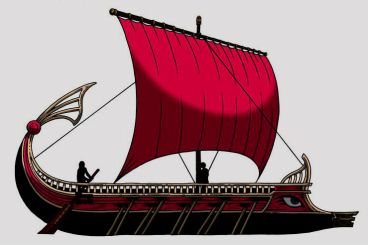
Your soul is the boat and you head for disaster.
You move toward the reef… your craft will be riven—
Call NOW on the Lord, for the current drives faster:
Join, una voce, on one point to anchor us.


 PROMPT 3:

write a Spanish form called a glosa – literally a poem that glosses, or explains, or in some way responds to another poem. The idea is to take a quatrain from a poem that you like, and then write a four-stanza poem that explains or responds to each line of the quatrain, with each of the quatrain’s four lines in turn forming the last line of each stanza.

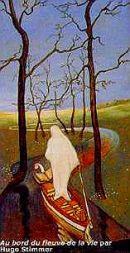
James Mangan: A Song from the Coptic