Sijo Elucidated


Verse forms? Traditional line-count Korean verse? OK—listen: 

Kim Chee tastes very strong, but it’s not ours; it comes from Korea. 

It won’t accompany well the tastes of our food, and that’s fine. 
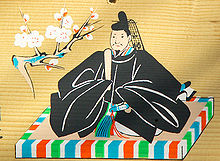
The sijo (Korean 시조, pronounced SHEE-jo) is a traditional three-line Korean poetic form typically exploring cosmological, metaphysical, or pastoral themes. Organized both technically and thematically by line and syllable count, sijo are expected to be phrasal and lyrical, as they are first and foremost meant to be songs.

Sijo are written in three lines, each averaging 14-16 syllables for a total of 44-46 syllables. Each line is written in four groups of syllables that should be clearly differentiated from the other groups, yet still flow together as a single line. When written in English, sijo may be written in six lines, with each line containing two syllable groupings instead of four.

Rant #19

Nature imagery ? Oh come on. NATURE? Your precious observations about, what, organic elements acted upon by atmospheric forces ? Yeah right (yawn); snow on a pine bough, whoopie. Some freaking BIRD you saw and the bird was I don’t know pooping on a rock at twilight or something, I mean COME ON. Just because it reminded you of some tawdry painting or swooned you into a superficial ecstasy do you HAVE to inflict it on us? Flowers, cherry trees in blossom, shit like that . . . Seriously, NATURE doesn’t give a F— about you. That bitch will freeze you to death in about eight hours just because you got lost and forgot to bring your winter coat and mittens up Mount Fuji. Nature? She’ll laugh while the sharks circle you and there you are scrawling some freaking maudlin HAIKU about the ocean. Matsuo Basho is like: “Next. Pass the remote and grab me another Asahi…” Silly gaijin Westerners with their Orientalisms and pseudo-Zen, some bullshit 5-7-5 syllable count— then they expect someone to READ the thing and be moved or experience SATORI or cry or something. Haikai,haibun,highball,lo-fi,yakitori, whatEVER, dude. Kyoto temple gongs and bamboo groves, my ass. Frog on a lily pad, cranes in the mist; throw your nature poetry in the carp-pool, buddy. Wordsworth looks up from his sukiyaki and he’s all: “Been there, done that, too…” Forget nature, man. Nature is SO over. Oh please, no. No more haiku, no. Hey honey have you seen my PHONE ?

PROMPT 19:

Write a humorous rant.
In this poem, you may excoriate to your heart’s content all the things that get on your nerves.

Jough: Po Mo

But why have a “National Poetry Month”?
The mainstream and popular activities in American culture don’t have, or need, a “national month.” You won’t see a “National Watch TV Month,” or a “National Football Month” because those are activities that people engage in without encouragement or convincing.
“Black History” and “Women’s History” months represent a subjugated sub-culture of American life. Never mind that women make up more than fifty percent of the American population and are therefore a majority. The fact is that the histories of these two groups was probably under- appreciated at some time, at least enough for someone to think that it may help to make a “Month” for their groups.
Poetry too is a ghettoized genre of American reading. It seems that most people respect poetry, are perhaps a little afraid of it, think that it’s beyond them, it’s boring, etcetera. So in order to sell more books of poetry, the AAP created “National Poetry Month” to bring poetry into the National Spotlight of the Under-Appreciated. It’s too bad that most of the poetry that they promote is of the vaguest and most unappealing kind being written. It’s necessary, though, when listening from their local shopping mall, for people to be able to fully understand a poem by hearing it only once. Any poems that require deeper readings to unlock their hidden treasures would be unsuited to the task of providing background noise while people pound down Big Macs in the food court.

National Schmational: Do We Really Need A “National Poetry Month”?

Copyright © by Jough Dempsey, 4/4/02, http://www.plagiarist.com